


The America’s Cup, how did the oldest international sporting competition in the world come to be?

THE AMERICA’S CUP turns 175 YEARS, it was in 1851, when John Cox Stevens boarded the steamboat that would take him home, across the Atlantic, to the New World, bringing with him a trophy made by the Crown jeweler R&S Garrard of Panton Street, London, not yet knowing that this trophy would mark competitive sailing for the years to come.
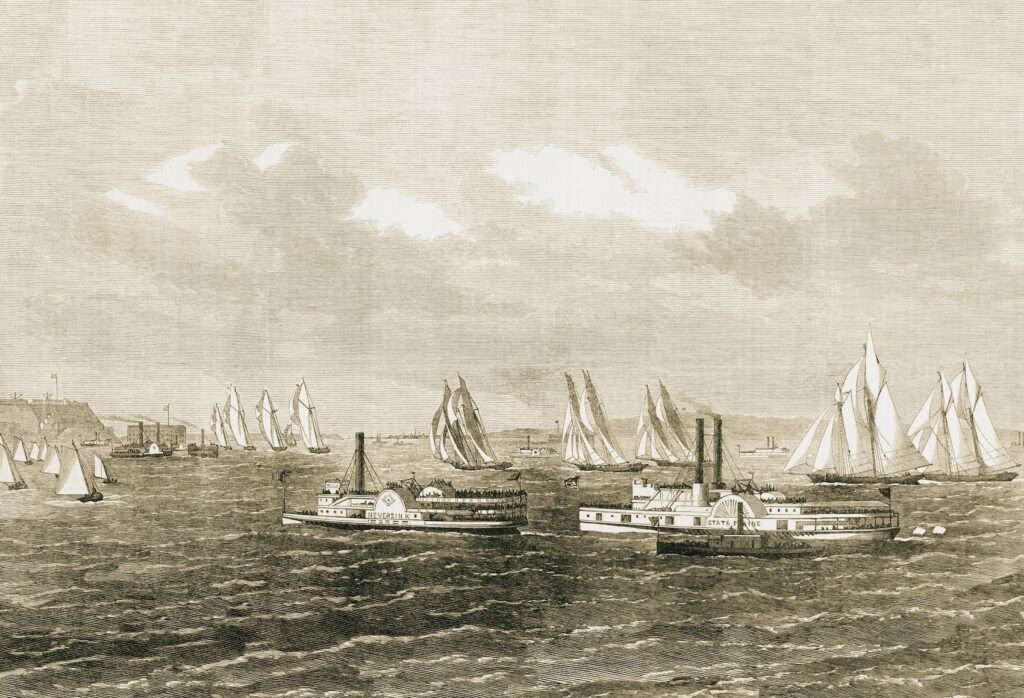
The America’s Cup. Competing yachts returning to the Narrows in New York Harbour. Published in The London Illustrated News
PHOTO CREDIT: BOB FISHER ARCHIVE/PPL
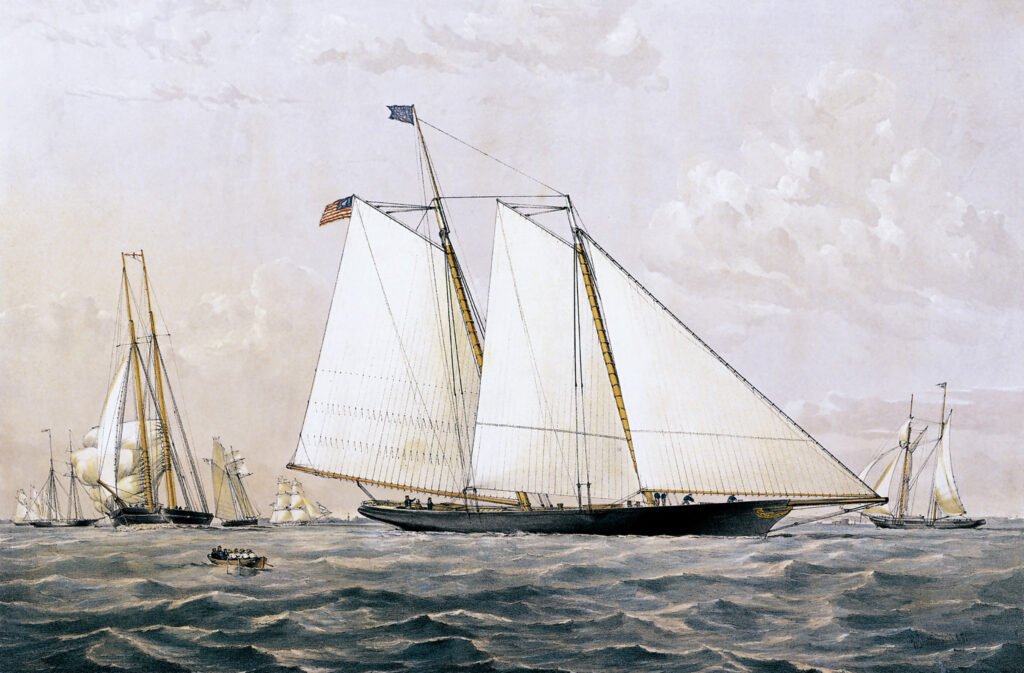
The legend has it that it all began on August 22, 1851 around the Isle of Wight, in Great Britain, the schooner America, representing the New York Yacht Club (NYYC) and commanded by commodore John Cox Stevens, challenged and defeated 15 British vessels in the race for the “Cup of One Hundred Guineas.” Queen Victoria, witnessing the finish and seeing America alone, reportedly asked who was in second place, receiving the famous reply: “Your Majesty, there is no second”.
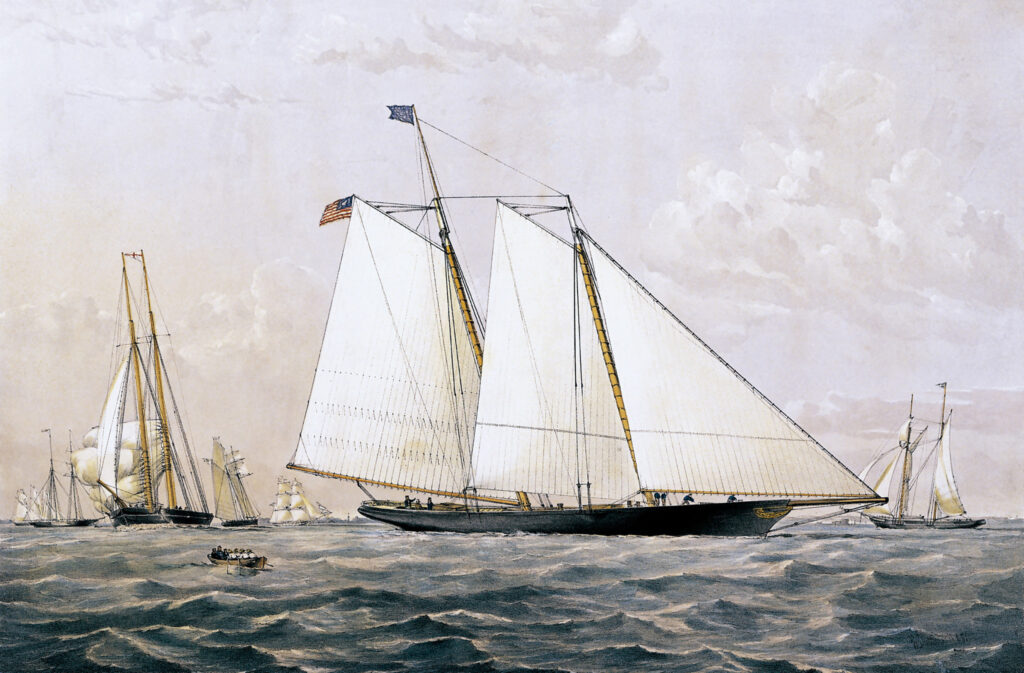
Circa 1851: The schooner ‘America’ lines up against 17 other yachts off Cowes for the famous race around the Isle of Wight that led to the America’s Cup. Five years later, ‘America’s’ owners presented the 100 Pound trophy to the New York Yacht Club and renamed it the America’s Cup. Original painting by TG Dutton owned by Cornelis van Rietschoten
PHOTO CREDIT:Cornelis van Rietschoten achive/PPL
In 1857, the owners of America donated the silver trophy to the New York Yacht Club, the donation was accompanied by the “Deed of Gift,” the founding document that regulates challenges and defines the Cup as a “friendly competition between nations”. From that date on, the New York Yacht Club defended the Cup with an uninterrupted dominance until 1983. In the 1930s, the massive J Class yachts raced, symbols of elegance and power, often referred to as the Golden Age. Great industrialists, bankers, and magnates of the time participated in this sporting competition, among the American defenders stood out Harold Vanderbilt; among the British challengers were the tea baronet Sir Thomas Lipton and aviation magnate Sir Thomas Sopwith.
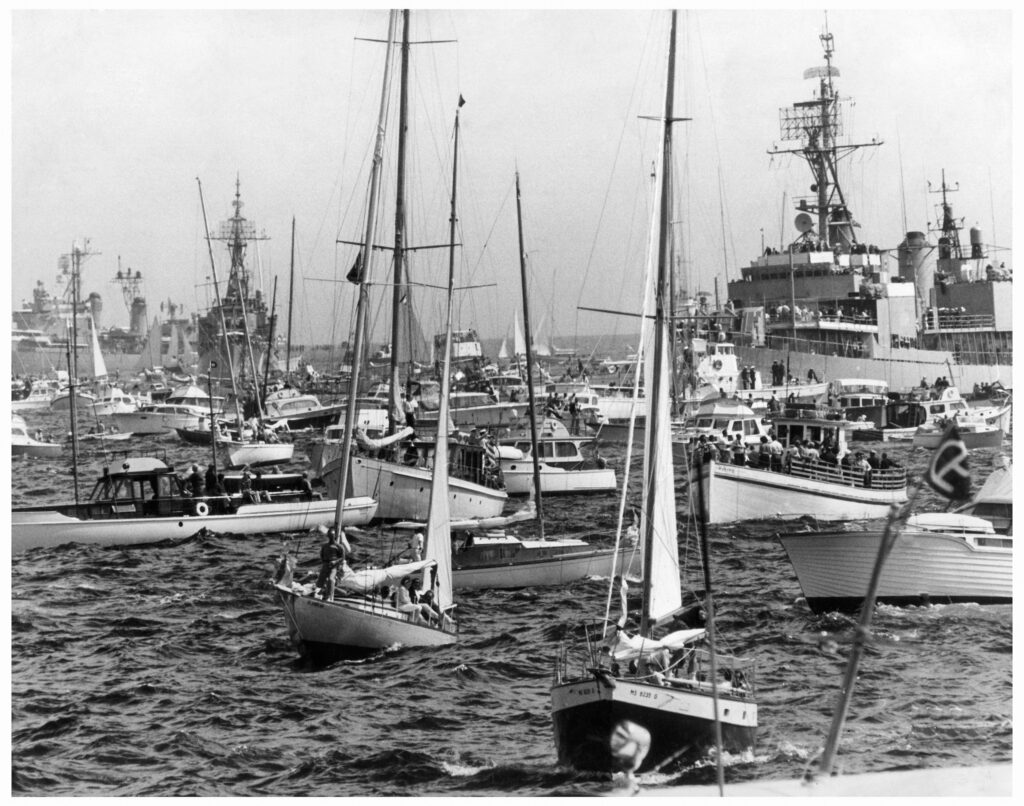
PHOTO CREDIT: Ian Dear Archive/PPL
***Circa 1962: America’s Cup spectator fleet. When the Australians entered the fray to challenge for the America’s Cup in 1962, spectators were drawn to the 12-metre matches just as they had been for the much larger yachts in previous decades.
The Historic Turning Point comes with the Australian vessel Australia II, equipped with a revolutionary winged keel and helmed by John Bertrand and Alan Bond, which in 1983, defeated the American defender Dennis Conner the ‘Mr America’s Cup’, breaking the longest winning streak in sports history. The cup flew to Australia, but soon returned to America thanks to Conner’s redemption, who after the defeat reclaimed the trophy, this time for his home club in San Diego, celebrated with a parade along Fifth Avenue in New York, the America’s Cup became a mass phenomenon and burst into everyone’s life.
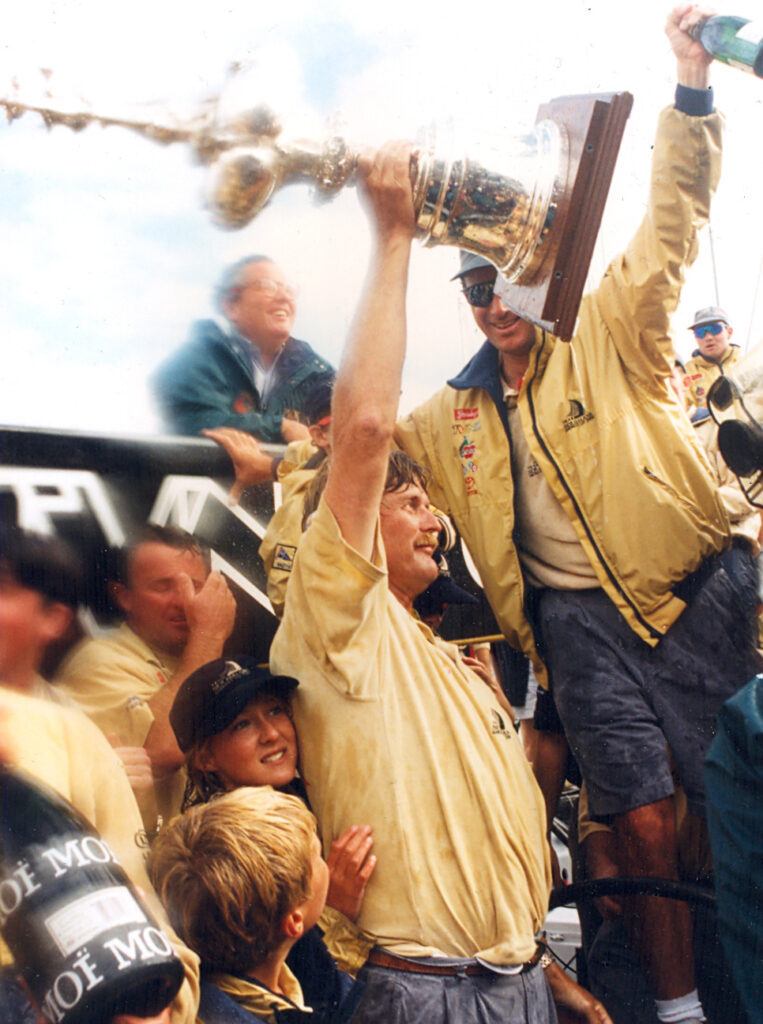
PHOTO CREDIT: John Nash/PPL
*** 1995 Peter Blake with his children holding up the America’s Cup after Team New Zealand beat Dennis Conner’s USA Stars and Stripes team to win the trophy
In 2003, New Zealand ceded the Cup to Switzerland, which became the first and, to this day, the only European team to lift the trophy. Only four Nations have won in 175 Years, testament to the extreme difficulty of conquering the trophy, in over a century and a half of history only four countries have managed to lift the “Old Jug”: Switzerland – United States – Australia – New Zealand.
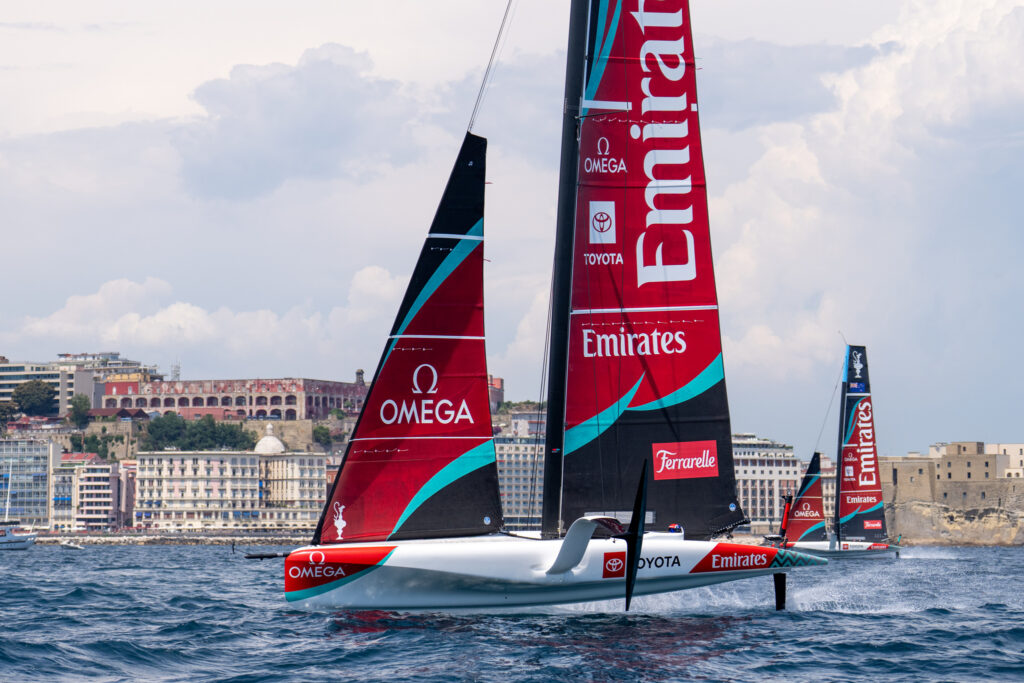
After defending the trophy in Valencia, Switzerland lost a bitter second ‘Deed of Gift Match’, a challenge held according to the strictest interpretations of the Deed and the Cup returned to the United States, to San Francisco. Emirates Team New Zealand was the first to achieve what had until then been considered impossible, namely sailing on foils upwind, and took what seemed an insurmountable lead of 8-2, just one race away from victory. Oracle Team USA performed a miracle, coming back from match point to win the America’s Cup 9-8. In Bermuda, the Kiwis introduced a new solution, replacing arm strength with leg power and bringing ‘cyclors’ into the Cup, already tested for the first time below deck in the 12 Metre era, inaugurating a period of unprecedented dominance in the long history of the Cup, becoming the first team to win three consecutive editions: Bermuda, Auckland, and Barcelona.
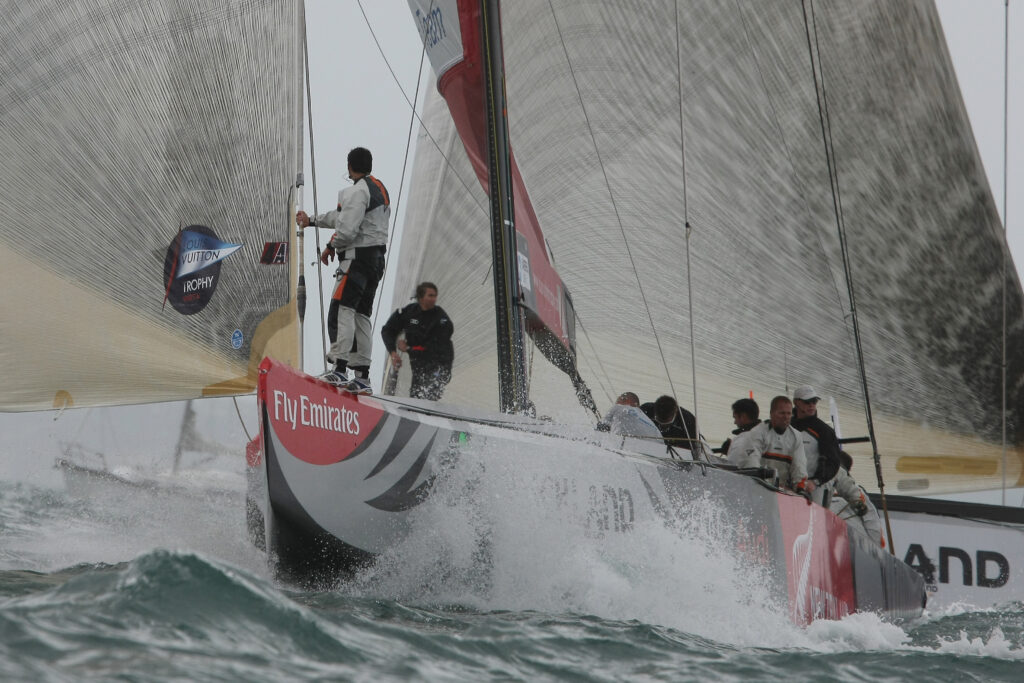
The America’s Cup Technical Evolution
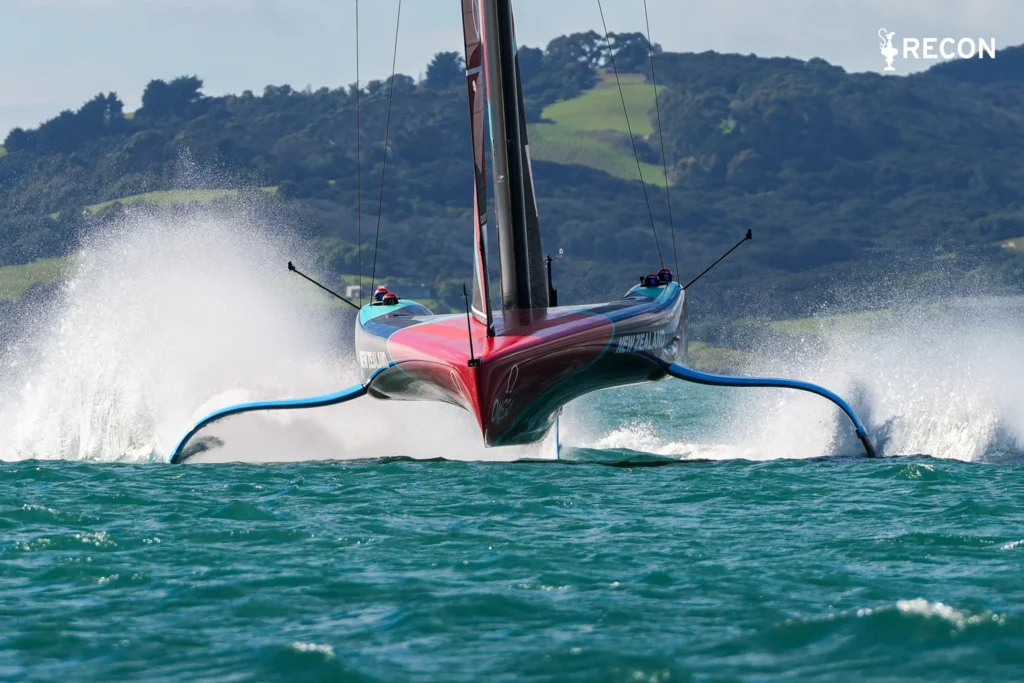
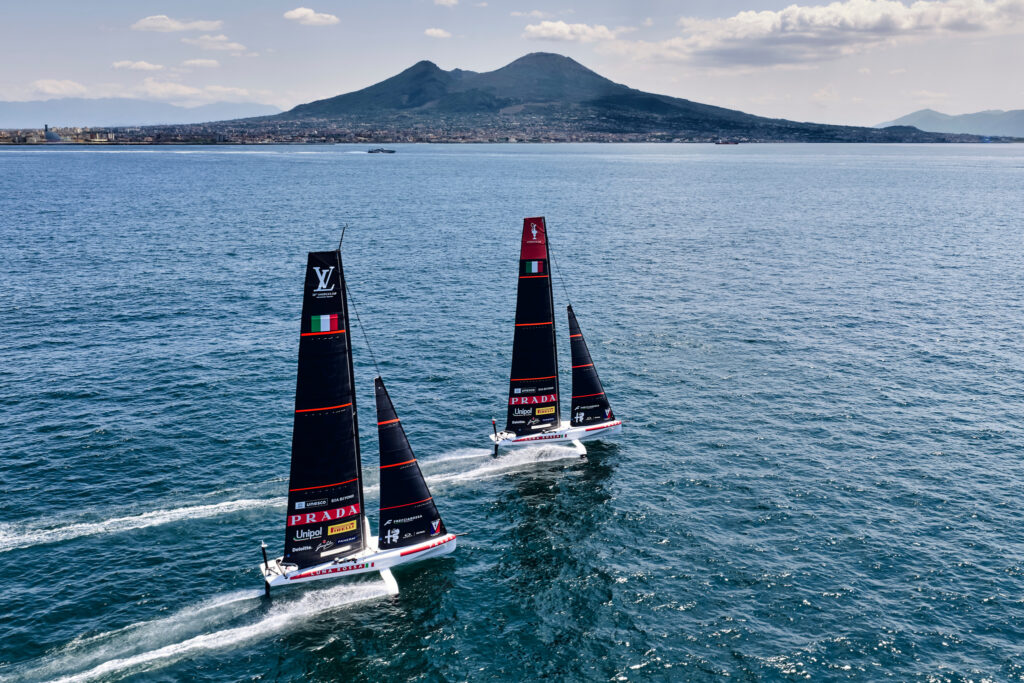
From the original speeds of 8–9 knots in 1851, the foiling hulls AC75 and AC40 have surpassed 55 knots. With the return of the Youth America’s Cup and the introduction of the Women’s America’s Cup, the future of the competition aims for integration, with the expectation of mixed crews on the AC75 for the 2027 America’s Cup in Naples.
Dennis Conner, speaking about the ingredients necessary to win the America’s Cup said: “Total dedication to the commitment made. The three fundamental ingredients for winning remain the same: attitude, attitude, attitude.”