


Seares and the smart mooring
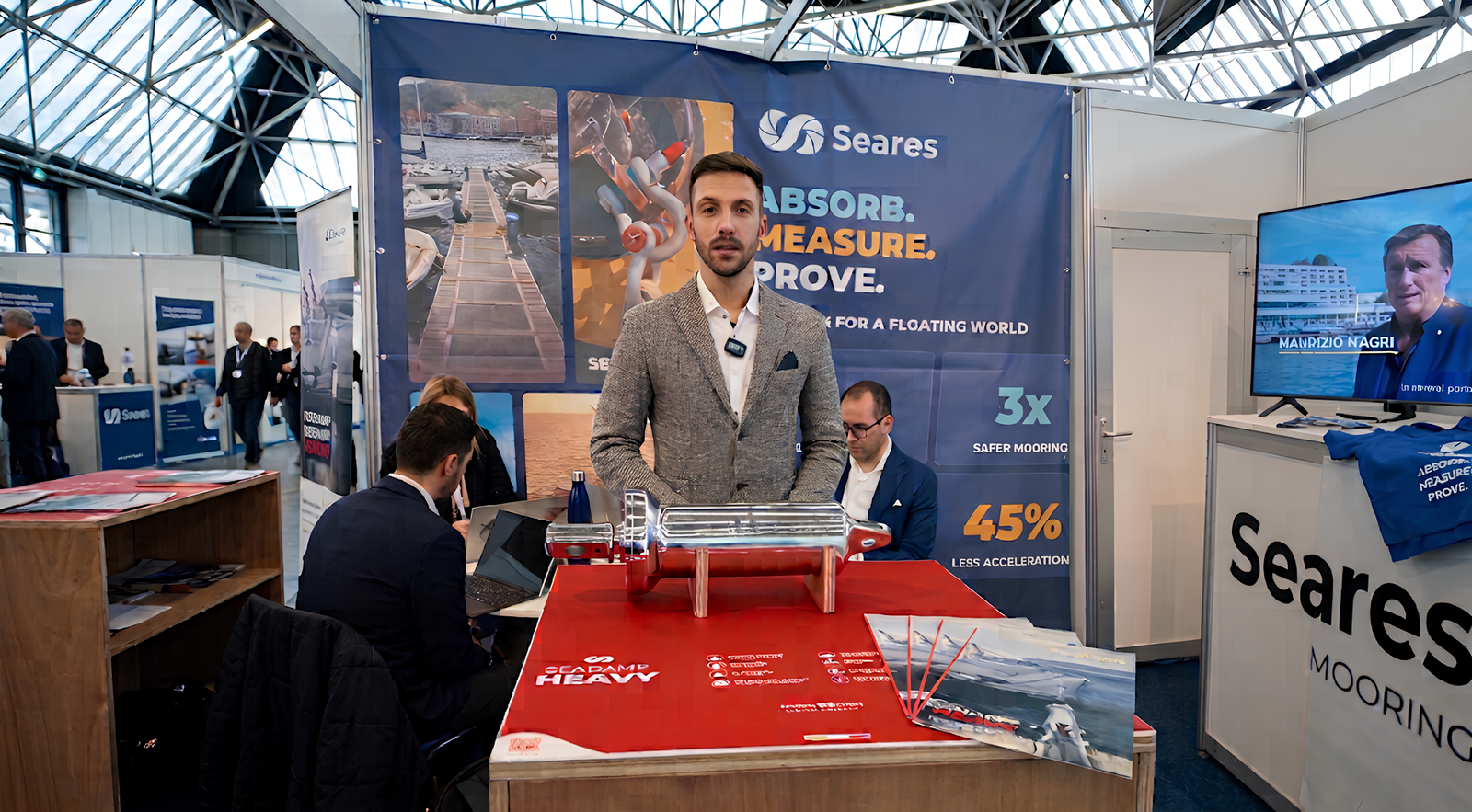
At the Metstrade in Amsterdam, the stand of Seares attracted the attention of shipowners, captains, marina managers, and offshore industry operators with a proposal that transforms an often taken-for-granted element — mooring and anchoring — into an intelligent, safe, and energy self-sufficient system. To illustrate the innovations and field applications of the Tuscan company, we are joined by engineer Nicolò Barsottini, Sales Manager of Seares.
Seares, the silent mooring
Engineer Barsottini, mooring is one of the most critical moments in managing a vessel, both for the recreational boater and for those who govern a large yacht or manage a marina. What is the philosophy behind Seares’ solutions?
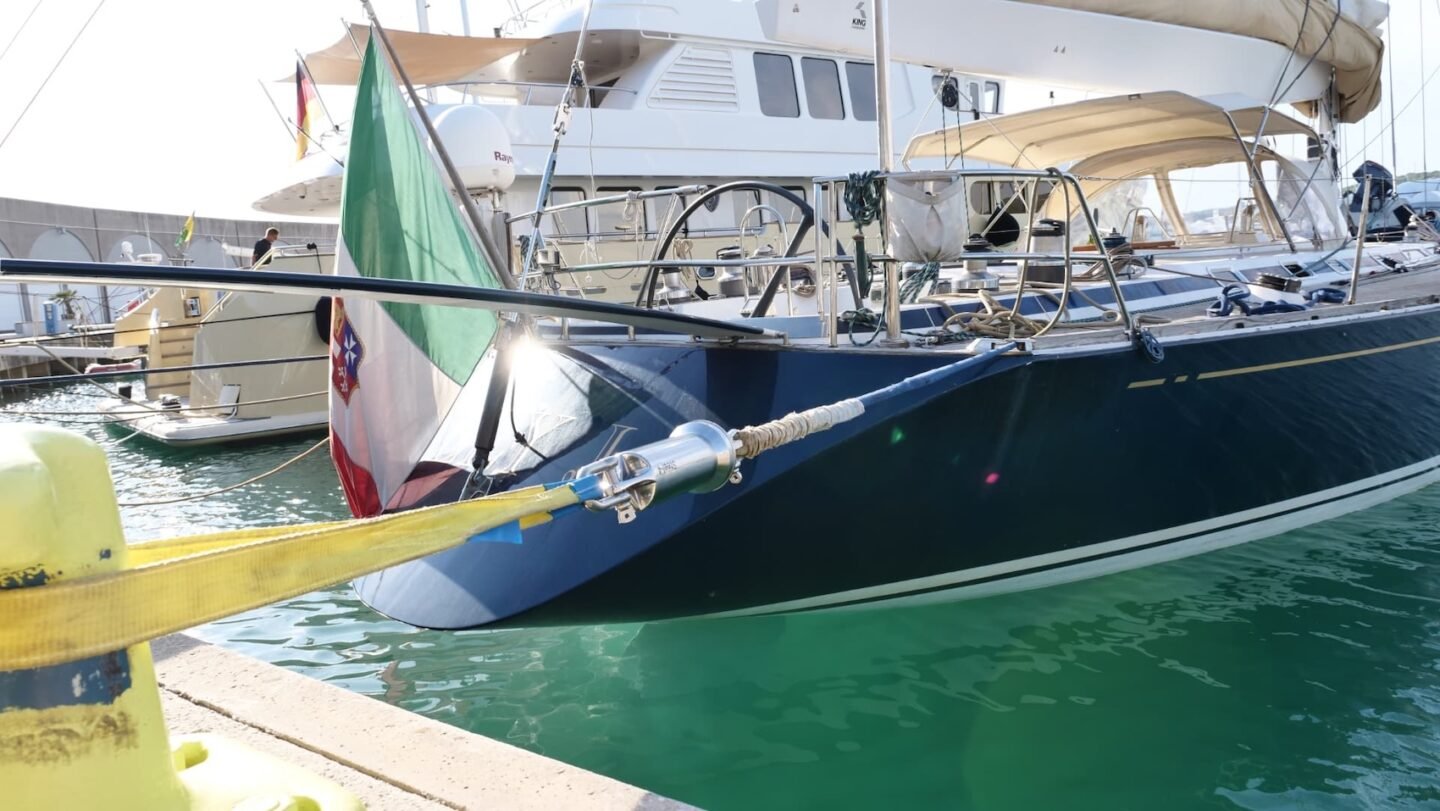
“Our goal is to surpass the traditional concept of a rope or rigid chain, introducing systems with intelligent dampers capable of absorbing and dissipating the kinetic energy generated by wave motion and gusts of wind. Whether it is a ten-meter recreational boat or a superyacht, the sudden stresses released on bollards, fairleads, and port structures pose a safety risk and a source of continuous wear. We intervene right there, making mooring progressive, controlled, and decidedly quieter and more comfortable on board.”
How is this technology adapted to different dimensional scales, from small pleasure boats to large yachts and port infrastructures?
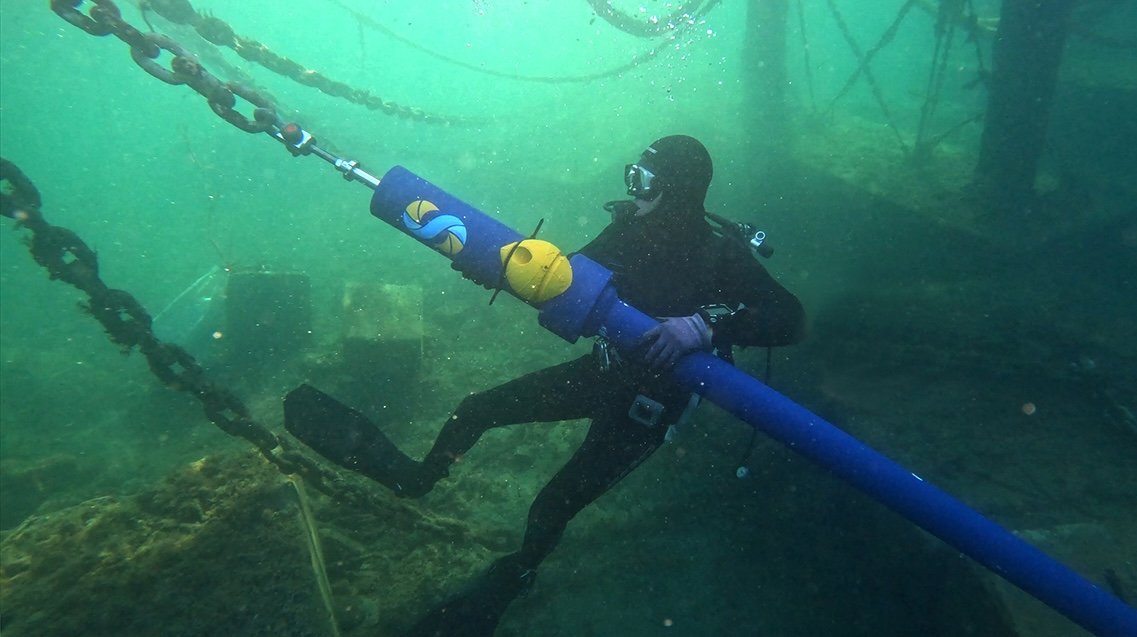
“Modularity is one of our strengths. For pleasure boats, we have developed compact devices that are easy to install even in retrofitting, replacing traditional mooring springs and eliminating jerks and squeaks. As we move up in size, towards the world of superyachts, the loads involved increase exponentially: in this area, we design systems with very high absorption capacity, customized to the specifications of the unit, which protect the superstructures and ensure stable holding even in challenging weather and sea conditions. Additionally, we work closely with some ports and marinas for the anchoring of floating docks: by integrating our dampers into the mooring lines of the docks, we drastically reduce mechanical stress on the chains and dead weights, extending the useful life of the entire infrastructure.”
You have already validated Seares technologies in prestigious and technically diverse contexts. Can you mention some significant installations?
“We have collaborated with world-class entities such as the Yacht Club de Monaco, where the focus on the safety of large yachts and sustainable innovation is paramount. In Italy, we have carried out very significant installations such as at the Port of the Island of Giglio, an island context exposed to dynamic meteorological conditions, at the Port of Pisa, where the system contributes to the management and monitoring of moorings in a strategic hub of the Upper Tyrrhenian Sea, and at Cala dei Sardi in Sardinia, one of the most advanced landings in the Mediterranean in terms of environmental sustainability and seabed protection. Each of these sites has confirmed how active damping reduces stress on structures and increases safety, demonstrating the versatility of our systems.”
In addition to recreational boating and marinas, you are extending your solutions to offshore aquaculture as well. What advantages does Seares technology bring to this sector?
“Open sea aquaculture facilities are subjected to constant and often extreme stresses from waves and currents. Applying our damped anchoring systems to the cages and mooring lines of the facilities means drastically reducing the peak loads on the nets, buoys, and seabed systems, decreasing the risk of breakage, the dispersion of materials into the sea, and extraordinary maintenance costs. Furthermore, just like in ports, being able to remotely monitor the tension status of the anchors allows operators to intervene in a targeted and timely manner after each storm.”

One of the most distinctive aspects of your systems is the ability to transform wave energy into a resource to power this monitoring. How does energy recovery work?
“It is the heart of our vision. Every time a vessel, a dock, or an offshore structure moves under the action of the waves, our system converts that mechanical stress into electrical energy. We do not simply dissipate force to protect the infrastructure, but we harvest clean energy directly from the wave motion. This makes the devices completely autonomous, eliminating the need for complex underwater wiring or continuous battery replacements.”
What type of data is collected through this energy and how is it used by commanders, marina managers, and operators?
“The energy produced powers a network of integrated sensors that monitor in real-time the status of mooring or anchoring. The systems constantly detect the applied loads, the frequency and intensity of stresses, the wear of components, and the local weather and sea conditions. All this data is transmitted to the cloud and made accessible through dedicated platforms or apps: the yacht’s captain, marina operators, or the aquaculture facility manager can remotely check the integrity of the lines, receive preventive alerts in case of abnormal peaks, and plan maintenance, intervening before a failure occurs. Safety at sea increasingly relies on data, and being able to collect it with zero impact by harnessing the sea itself is the natural direction of our work.”